Americas Countries
The Americas region encompasses 56 countries with a combined population of 1.04B, making it one of the most populous regions on Earth. United States (340.1M) is the region's most populous nation, accounting for a significant share of the regional total. 29 countries have no land borders, functioning as island or maritime states. 35 of 56 countries are United Nations members, participating in the full range of multilateral institutions.
Countries
56
Total Population
1.04B
Most Populous
United States
340.1M
Largest by Area
Canada
9,984,670 km²
Population Breakdown
Americas's population of 1.04B is heavily concentrated in a small number of nations. The five most populous countries are United States (340.1M), Brazil (213.4M), Mexico (130.6M), Colombia (53.1M), Argentina (46.7M). These top 5 nations account for 75% of Americas's total population, illustrating the uneven distribution of people across the region. Linguistically, Americas is home to approximately 13 distinct languages across its 56 nations, reflecting considerable cultural and ethnic diversity. At the other end of the spectrum, the three least populous nations are United States Minor Outlying Islands (0), Falkland Islands (4K), Montserrat (4K). The least populous nation, United States Minor Outlying Islands, has 0 people, representing a fraction of a percent of the region's total.
Geographic Profile
The region covers a combined land area of 42,230,379.2 km². Canada is the largest country at 9,984,670 km², while Canada is the smallest at 9,984,670 km². The geographic extent of Americas spans 16 distinct timezones, reflecting a substantial east-west range. 29 nations function as island or maritime states with no land borders, relying entirely on sea and air links for international connectivity. The varied terrain across Americas includes a wide range of climatic zones and ecological systems, from tropical rainforests to arid deserts and high-altitude mountain ranges, shaping both settlement patterns and economic activity throughout the region.
 United States
- Population
- 340.1M
- Capital
- Washington, D.C.
 Brazil
- Population
- 213.4M
- Capital
- Brasília
 Mexico
- Population
- 130.6M
- Capital
- Mexico City
 Colombia
- Population
- 53.1M
- Capital
- Bogotá
 Argentina
- Population
- 46.7M
- Capital
- Buenos Aires
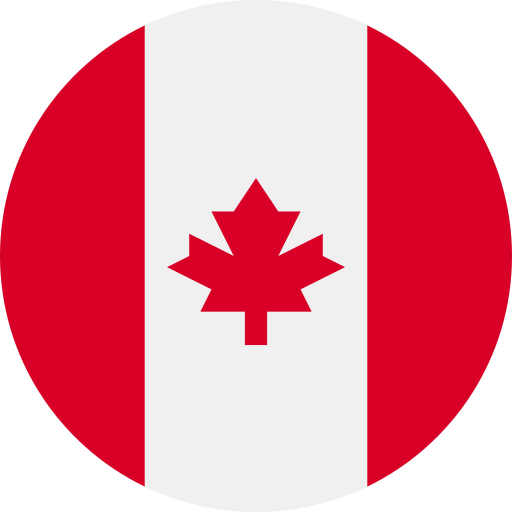 Canada
- Population
- 41.7M
- Capital
- Ottawa
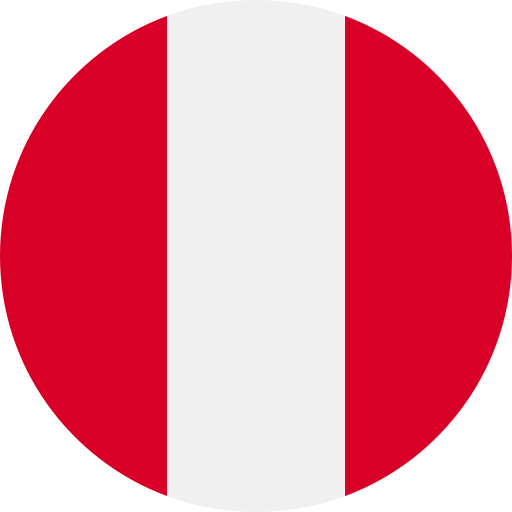 Peru
Peru- Population
- 34.4M
- Capital
- Lima
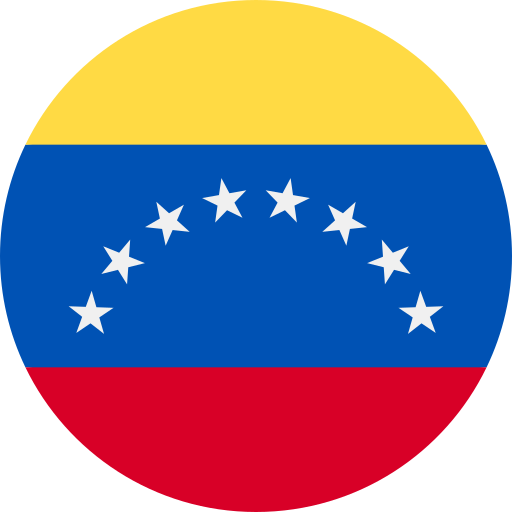 Venezuela
- Population
- 28.5M
- Capital
- Caracas
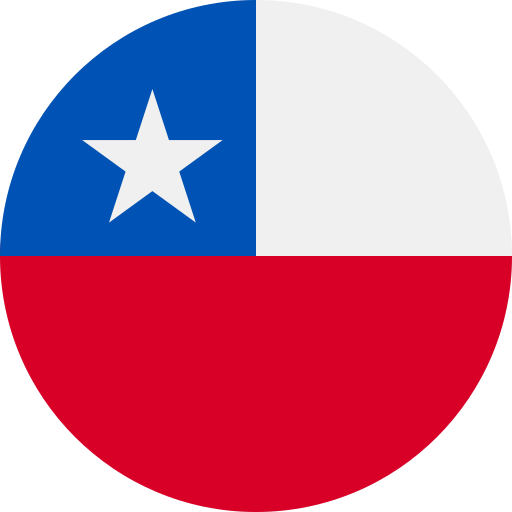 Chile
Chile- Population
- 20.2M
- Capital
- Santiago
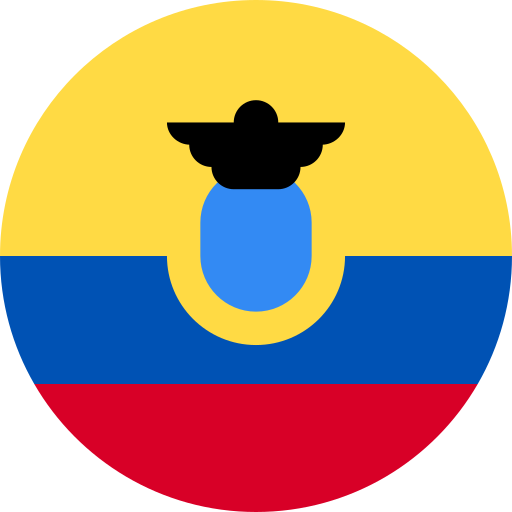 Ecuador
- Population
- 18.1M
- Capital
- Quito
 Guatemala
- Population
- 18.1M
- Capital
- Guatemala City
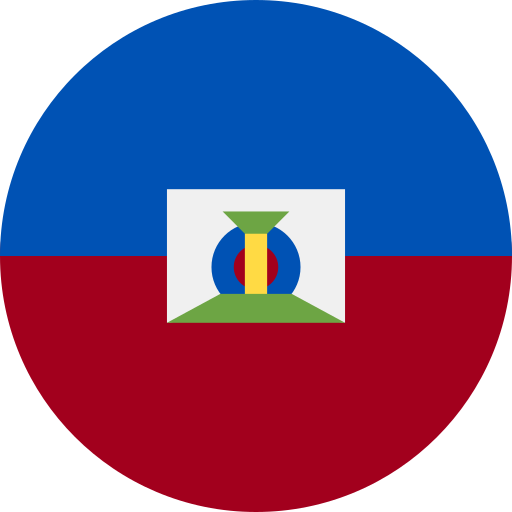 Haiti
Haiti- Population
- 11.9M
- Capital
- Port-au-Prince
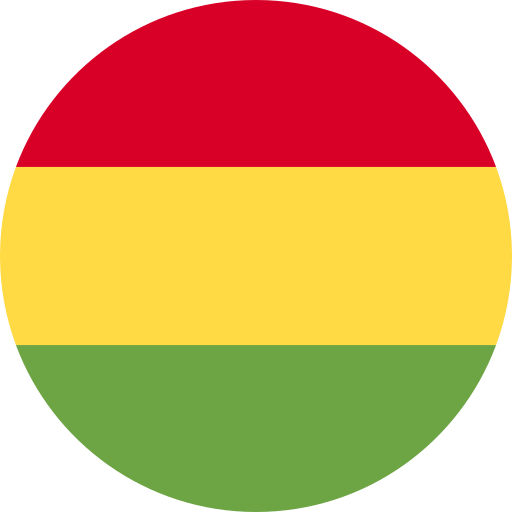 Bolivia
- Population
- 11.4M
- Capital
- Sucre
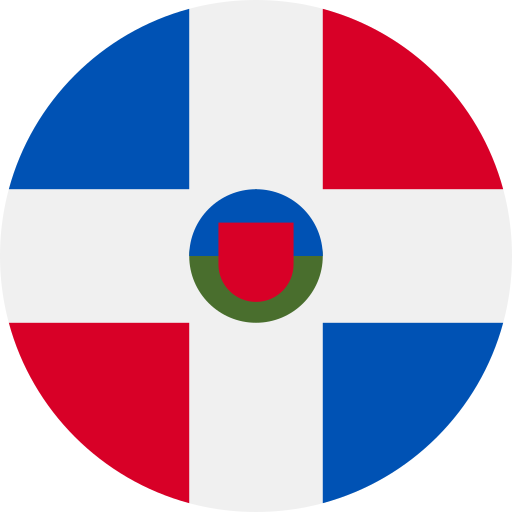 Dominican Republic
- Population
- 10.8M
- Capital
- Santo Domingo
 Honduras
- Population
- 9.9M
- Capital
- Tegucigalpa
 Cuba
Cuba- Population
- 9.7M
- Capital
- Havana
 Nicaragua
- Population
- 6.8M
- Capital
- Managua
 Paraguay
- Population
- 6.1M
- Capital
- Asunción
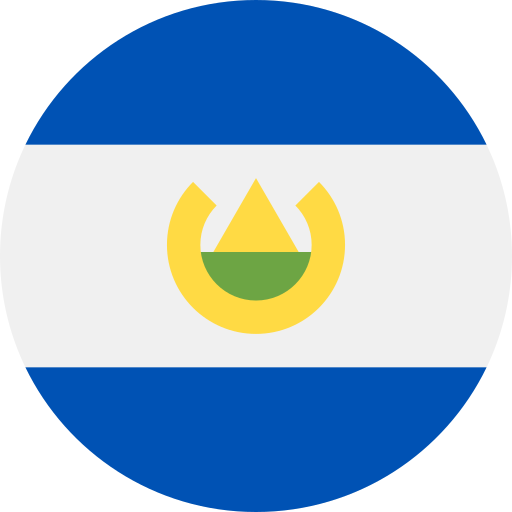 El Salvador
- Population
- 6.0M
- Capital
- San Salvador
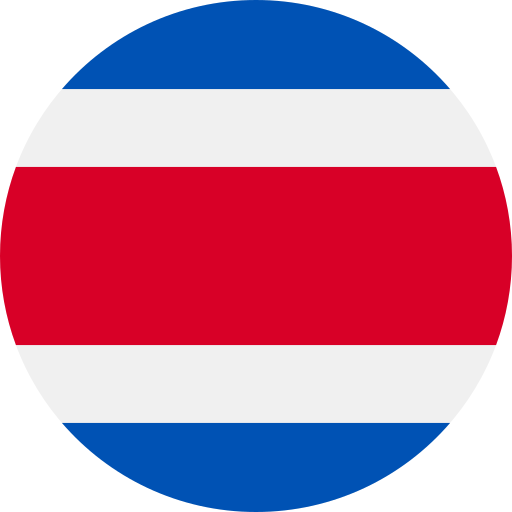 Costa Rica
- Population
- 5.3M
- Capital
- San José
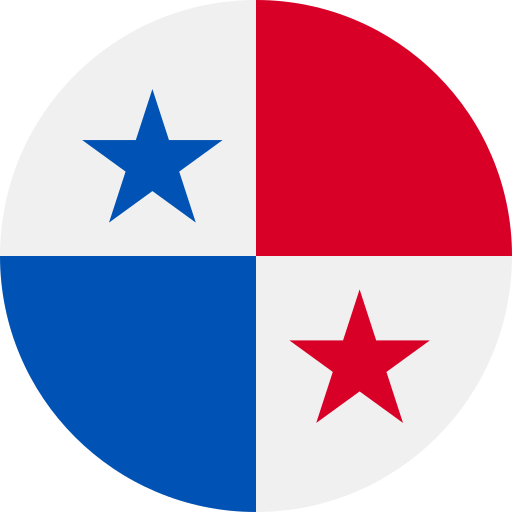 Panama
- Population
- 4.1M
- Capital
- Panama City
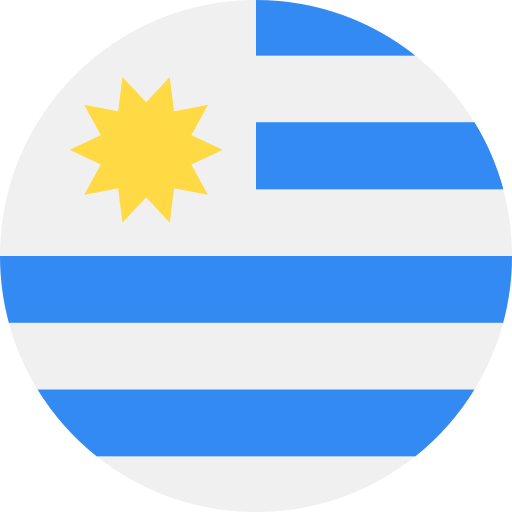 Uruguay
- Population
- 3.5M
- Capital
- Montevideo
 Puerto Rico
- Population
- 3.2M
- Capital
- San Juan
 Jamaica
- Population
- 2.8M
- Capital
- Kingston
 Trinidad and Tobago
- Population
- 1.4M
- Capital
- Port of Spain
 Guyana
- Population
- 773K
- Capital
- Georgetown
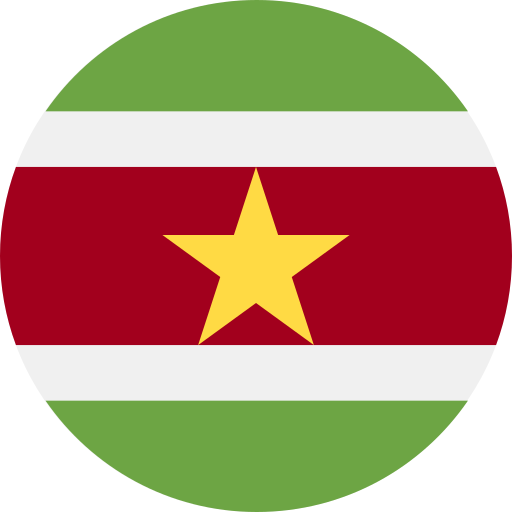 Suriname
- Population
- 617K
- Capital
- Paramaribo
 Belize
- Population
- 418K
- Capital
- Belmopan
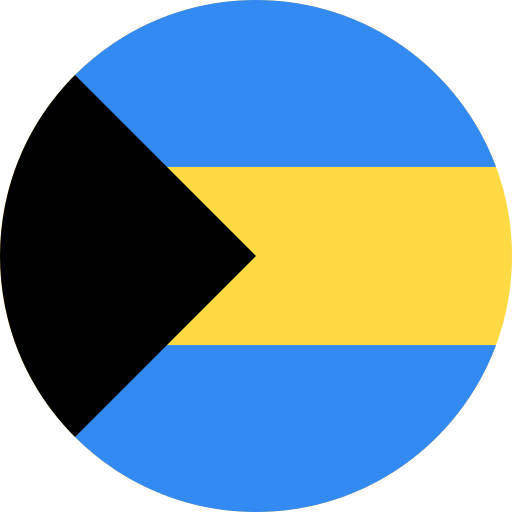 Bahamas
- Population
- 398K
- Capital
- Nassau
 Guadeloupe
- Population
- 379K
- Capital
- Basse-Terre
 Martinique
- Population
- 350K
- Capital
- Fort-de-France
 French Guiana
- Population
- 292K
- Capital
- Cayenne
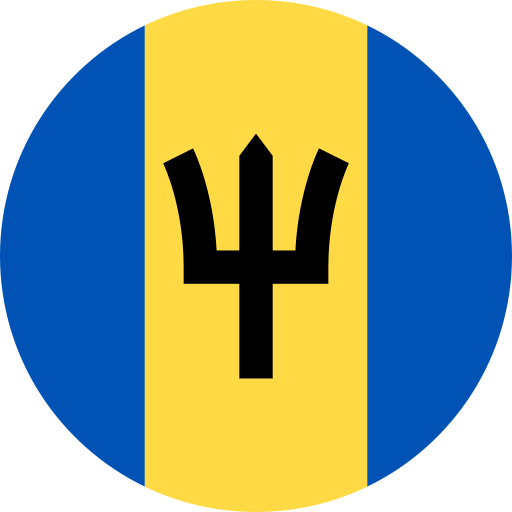 Barbados
- Population
- 268K
- Capital
- Bridgetown
 Saint Lucia
- Population
- 184K
- Capital
- Castries
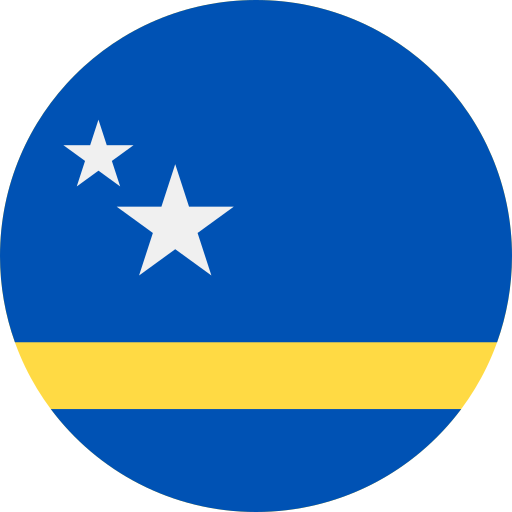 Curaçao
- Population
- 156K
- Capital
- Willemstad
 Saint Vincent and the Grenadines
- Population
- 111K
- Capital
- Kingstown
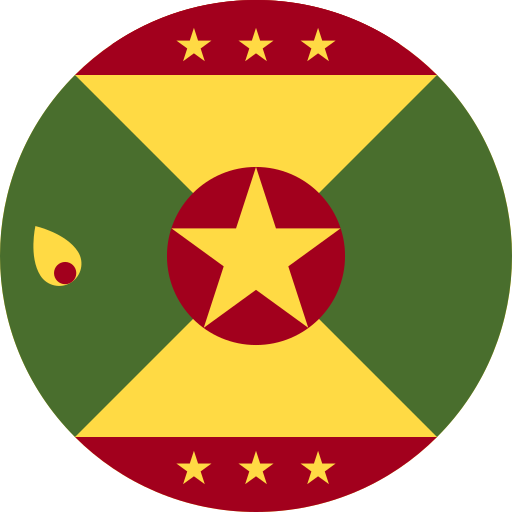 Grenada
- Population
- 109K
- Capital
- St. George's
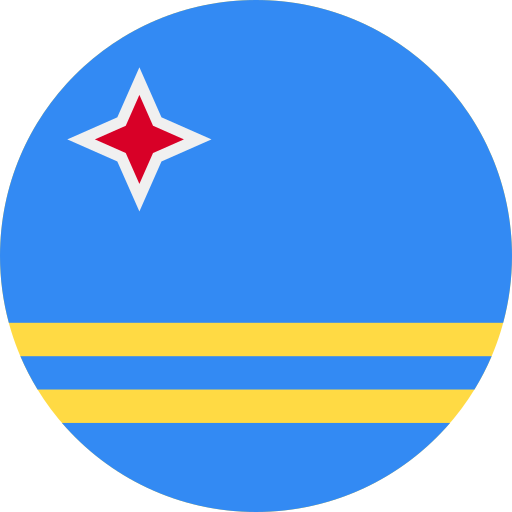 Aruba
Aruba- Population
- 108K
- Capital
- Oranjestad
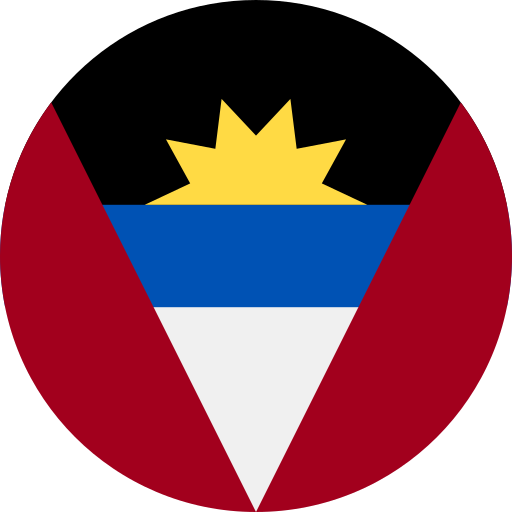 Antigua and Barbuda
- Population
- 104K
- Capital
- Saint John's
 United States Virgin Islands
- Population
- 87K
- Capital
- Charlotte Amalie
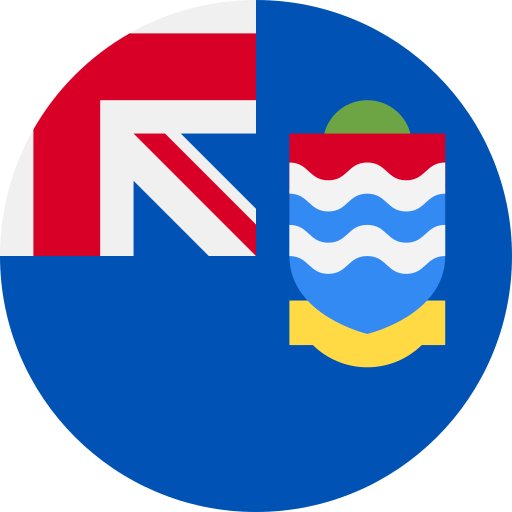 Cayman Islands
- Population
- 85K
- Capital
- George Town
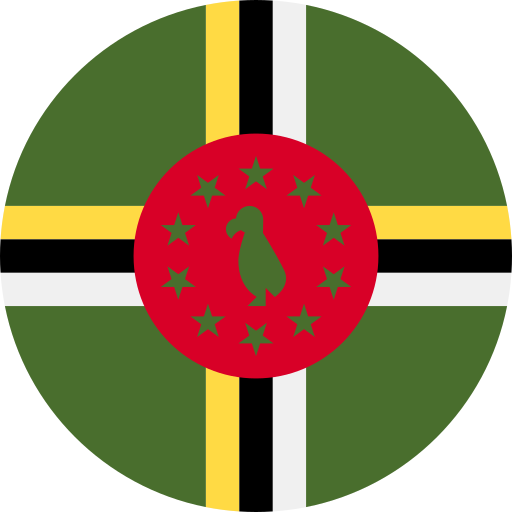 Dominica
- Population
- 67K
- Capital
- Roseau
 Bermuda
- Population
- 64K
- Capital
- Hamilton
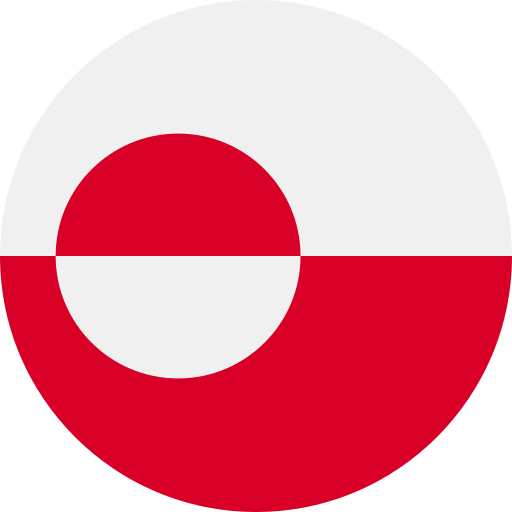 Greenland
- Population
- 57K
- Capital
- Nuuk
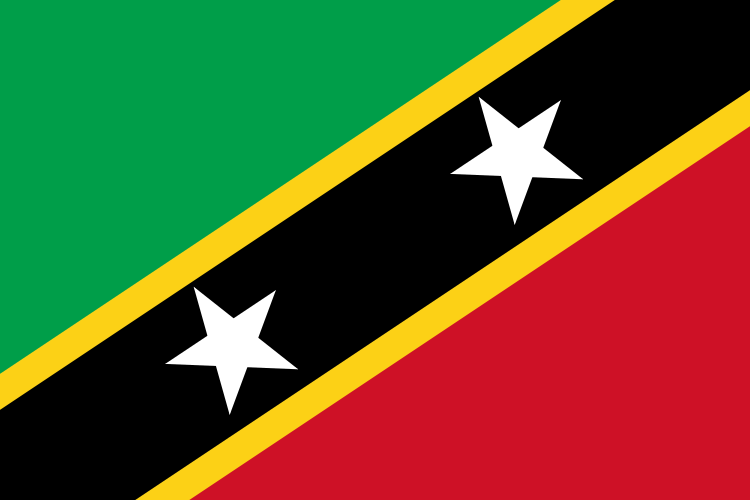 Saint Kitts and Nevis
- Population
- 51K
- Capital
- Basseterre
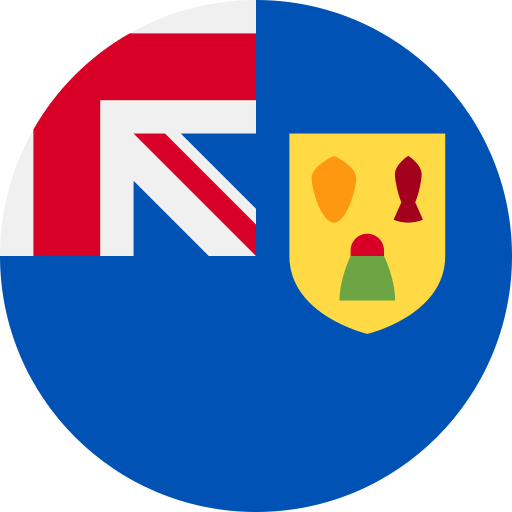 Turks and Caicos Islands
- Population
- 51K
- Capital
- Cockburn Town
 Sint Maarten
- Population
- 41K
- Capital
- Philipsburg
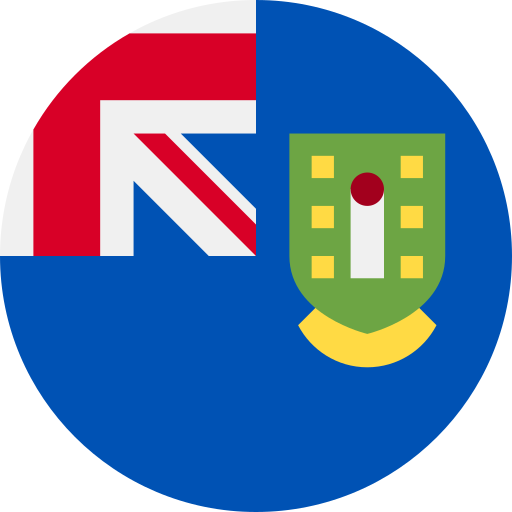 British Virgin Islands
- Population
- 39K
- Capital
- Road Town
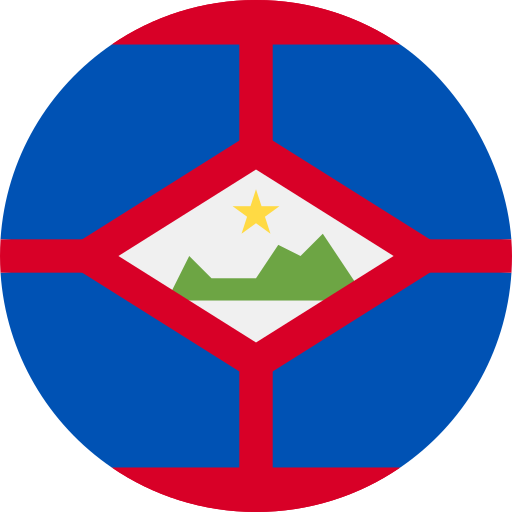 Caribbean Netherlands
- Population
- 32K
- Capital
- Kralendijk
 Saint Martin
- Population
- 31K
- Capital
- Marigot
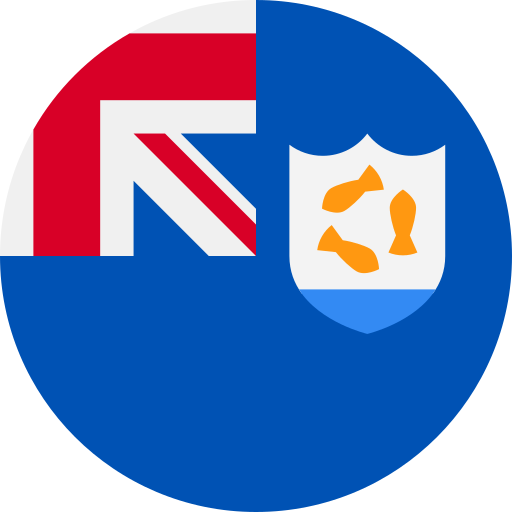 Anguilla
- Population
- 16K
- Capital
- The Valley
 Saint Barthélemy
- Population
- 11K
- Capital
- Gustavia
 Saint Pierre and Miquelon
- Population
- 6K
- Capital
- Saint-Pierre
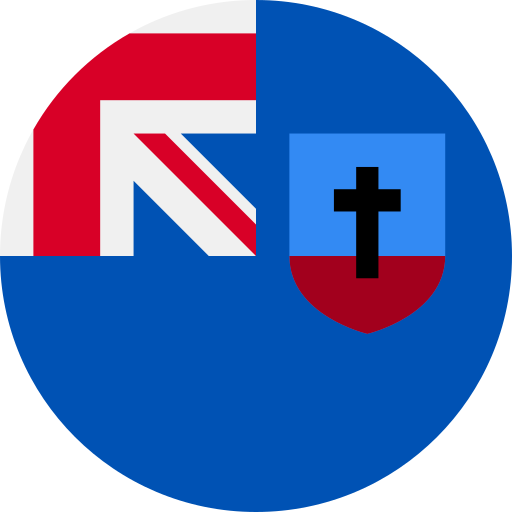 Montserrat
- Population
- 4K
- Capital
- Plymouth
 Falkland Islands
- Population
- 4K
- Capital
- Stanley
 United States Minor Outlying Islands
- Population
- 0
- Capital
- Washington DC
Economic Profile
The region spans 4 subregions with 36 distinct currencies, 35 independent nations, and 21 dependent territories. The United States alone accounts for over 60% of the Americas' combined economic output. Economic development across Americas varies considerably by subregion, with some areas classified as high-income by the World Bank and others as lower-middle-income. The presence of 36 distinct currencies reflects the monetary policy diversity across the region, ranging from independently floating exchange rate regimes to currency unions and dollarized economies. Trade integration varies significantly among the region's 35 sovereign states.
Country Highlights
Americas contains countries that represent the full spectrum of population size, land area, and geographic connectivity. United States is the most populous nation with 340.1M residents with a population density of 36 people per km². At the other extreme, United States Minor Outlying Islands is the least populous with 0 people. By land area, Canada is the largest at 9,984,670 km², giving it a vast geographic footprint within the region. Canada is the smallest at 9,984,670 km², making it one of the more compact nations in Americas. In terms of land connectivity, Brazil shares land borders with 10 countries, the most in the region. This extensive border network reflects its central geographic position and influences its trade, migration, and diplomatic relationships with neighboring states.
Historical Context
The Americas span two continents (North America and South America) plus the Caribbean, covering 42.5 million km² from the Arctic to Patagonia. The region encompasses 35 sovereign states and numerous territories. North America hosts the world's largest economy (United States) and the world's second-largest country by area (Canada). South America contains the Amazon rainforest, which covers approximately 5.5 million km² across 9 countries. MERCOSUR and USMCA are the region's primary trade agreements, governing the majority of inter-regional commerce.
Frequently Asked Questions
How many countries are in Americas?
Americas has 56 countries. Of these, 35 are United Nations member states and 35 are recognized as fully independent nations. 29 countries have no land borders and operate as island or maritime states.
What is the total population of Americas?
The total population of Americas is approximately 1.04B (World Bank data). United States is the most populous country in the region with 340.1M residents. The least populous nation, United States Minor Outlying Islands, has 0 people.
What is the largest country in Americas?
Canada is the largest country in Americas by land area, covering 9,984,670 km². This makes it the dominant geographic presence in the region. The second-largest is United States at 9,525,067 km².
What is the smallest country in Americas?
Canada is the smallest country in Americas by land area, covering just 9,984,670 km². Despite its small size, it is a fully independent nation and a United Nations member state.
What languages are spoken in Americas?
Americas is home to approximately 13 distinct languages across its 56 nations. The most widely spoken languages in the region include English, Spanish, French, Dutch, Guaraní. This linguistic diversity reflects the varied ethnic and cultural heritage of Americas's peoples, shaped by both indigenous traditions and historical patterns of migration and colonization.